CITES and Sourcing
What the convention does, which skins it covers, and what we do not claim.
This site used to say our skins were “CITES certified”. That was wrong, and this page replaces it. CITES does not certify farms and it does not certify skins. What follows is what it actually does, which of our materials it covers, and what we are not claiming.
What CITES is
CITES is the Convention on International Trade in Endangered Species of Wild Fauna and Flora. It has been in force since 1975 and most countries in the world are party to it. It governs one thing: the movement of listed species across international borders.
Species are listed in three appendices according to how much control the trade in them needs. Appendix I covers species threatened with extinction, where commercial trade in specimens taken from the wild is prohibited. Appendix II covers species whose trade has to be controlled for it to stay sustainable. Appendix III covers species a single member state has asked the others to help it protect. The lists are reviewed at each Conference of the Parties, so the position for any one species is whatever the appendices say at the time.
What a permit is, and who issues it
A listed skin cannot leave its country of origin without an export permit. That permit is issued by that country’s CITES Management Authority on the advice of its Scientific Authority, and it names the species, the quantity and the source of the specimen. The importing country checks it on arrival.
Where an Appendix-I species is bred in captivity for commercial purposes, the breeding operation itself can be entered on a register kept by the CITES Secretariat, which allows its specimens to be traded on Appendix-II terms. Monitoring that operation afterwards is the job of the national authority where it sits, not of CITES.
What CITES is not
This is the part the trade blurs, and we blurred it too.
- CITES does not certify a farm. There is no CITES certificate for a farm to hold.
- CITES does not certify or grade leather. It has nothing to say about quality.
- CITES does not audit animal welfare. Welfare is a matter for the law of the country the farm sits in.
- CITES does not make a skin ethical. It makes a skin traceable, which is a smaller and more useful claim.
Which of our materials CITES covers
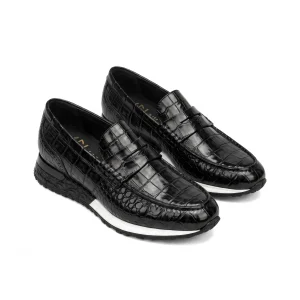
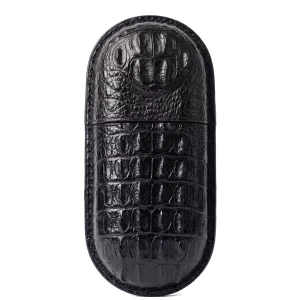
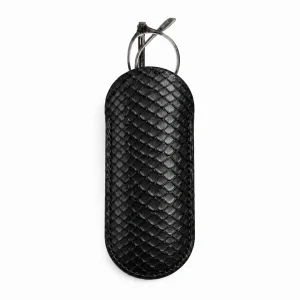
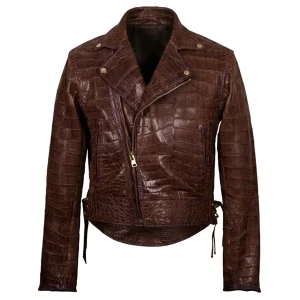
Crocodile, alligator, python and monitor lizard are all listed species. A hide of any of them reaches a tannery with the export permit for the consignment it travelled in, and cannot be imported without it.
Ostrich and stingray sit outside that framework. The ostrich listing reaches only the wild populations of a dozen North and West African states, and farmed ostrich elsewhere is not in the appendices at all. The stingray used for leather is not a listed species either. Neither one needs a CITES permit, so we do not claim one for them. What we say instead is what is true of both: farm-raised, and documented.
What we do not claim
A small house that states only what it can show is more use to you than one that implies the rest.
- We hold no sustainability certification from any third party. None has been issued to us and none can be requested.
- No independent body has audited our supply chain.
- A CITES permit covers the consignment a hide travelled in. It is not a welfare guarantee, and we do not present it as one.
- We are not a tannery. The hides are tanned before they reach the atelier.
Taking a piece across a border
A finished article made from a listed species can need its own documentation when it crosses a frontier, whichever direction it is going and whether or not it was bought abroad. The rules are the destination country’s, not ours. Shipping and Delivery sets out what we send with an order and what customs may ask you for.
Reading further
- The convention, the appendices and the current listings are published by the CITES Secretariat at cites.org.
- Frequently Asked Questions covers sourcing alongside the practical questions.