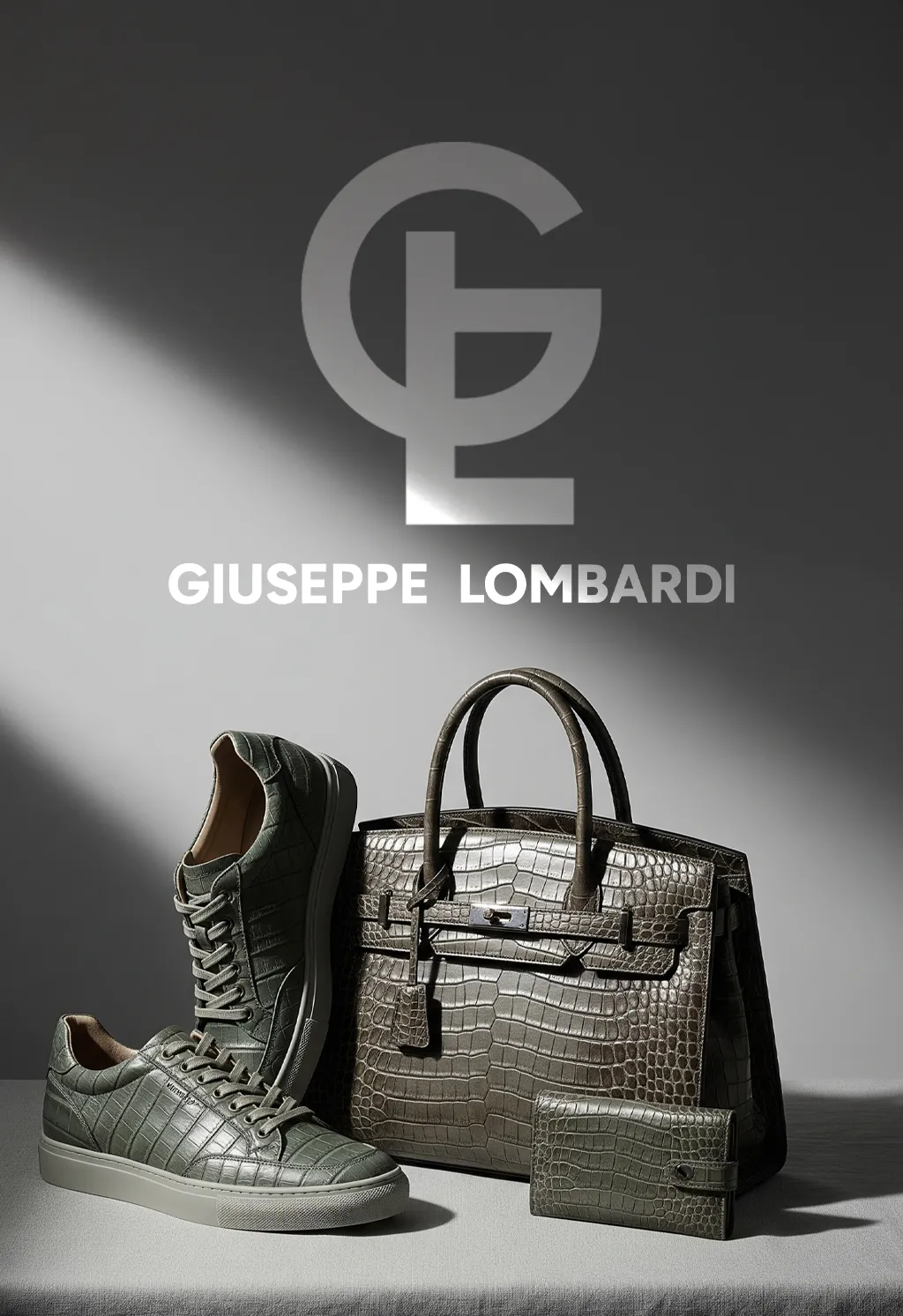
When you buy a luxury item like a wallet, bag, or boots made from exotic leather, it’s important to know what you’re getting. The luxury market has many imitations that don’t last. Knowing how to spot real exotic leather is a valuable skill.
At Giuseppe Lombardi, we use certified, traceable exotic skins for every piece. Here’s what our artisans and you should look for.
1. Check the Scale Pattern
To find real exotic leather, look at the scale pattern. In nature, no two animals have the same skin markings.
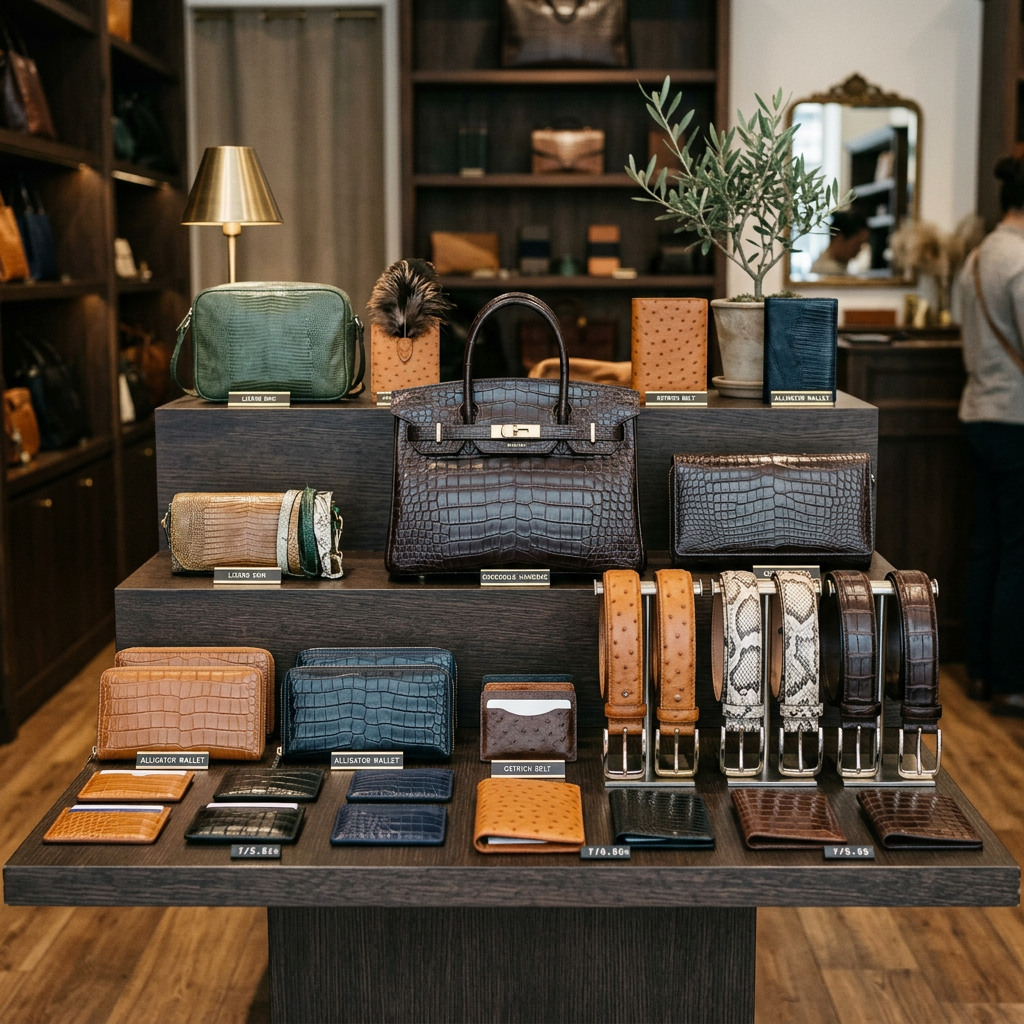
Crocodile & Alligator: Look for the “umbilical” pore, a small dot in the center of each scale. These sensory organs are unique to crocodilians and can’t be copied in embossed leather. Alligator scales are more regular and symmetric, while crocodile scales are rougher and varied.
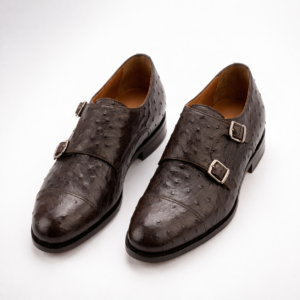
Ostrich: Real ostrich leather has raised quill bumps in a natural pattern across the central “crown” of the hide. The bumps should feel firm and three-dimensional, not flat or painted on.
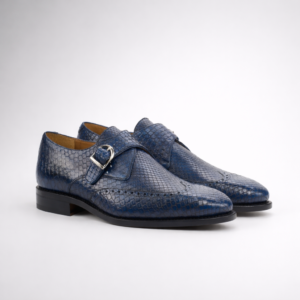
Python & Lizard: Real python scales overlap naturally with varied sizes, larger in the center, tapering toward the edges. Lizard leather (often monitor or tejus) has tiny, tightly packed scales with a natural sheen that catches light differently from every angle. Discover our latest arrivals to see some fine examples.
Stingray: Real shagreen (stingray leather) has a pebbly, almost granular texture with a natural shine. The “eye,” a smooth central patch where the spine was, is a sign of authenticity.
2. Feel the Texture — Front and Back
Flip the piece over. Real exotic leather has a suede-like backing, soft, slightly fibrous, and consistent. Embossed or bonded leather often shows a uniform fabric backing or synthetic mesh underneath.
On the front, run your finger across the surface. Real exotic leather changes temperature slightly, warming to your touch gradually. Synthetic materials feel uniformly cool or warm.
3. Smell It
This may sound unusual, but leather has a distinctive smell—earthy, slightly animal, and rich. This scent develops and mellows over time. Synthetic or bonded leather smells of chemicals, plastic, or adhesive, especially when new.
4. Check the Weight
Real exotic leather has substance. A real crocodile leather wallet feels noticeably heavier than an embossed cowhide version of the same size. This is because exotic skins are dense, and the tanning process preserves their natural thickness.
5. Ask for Documentation
A reputable seller of exotic leather should provide CITES (Convention on International Trade in Endangered Species) documentation for protected species like crocodile, alligator, and python. This is not just good practice but also the law in most countries. At Giuseppe Lombardi, all our exotic skins are fully CITES-compliant and traceable to certified farms. Learn more about our commitment to quality and authenticity in Our Story.
6. Price as an Indicator
Real exotic leather is expensive due to raw material cost, tanning complexity, and artisan labor, not brand markup. A “crocodile leather wallet” selling for $40 is almost certainly embossed cowhide. Authentic crocodile pieces start at several hundred dollars and increase with skin quality and craftsmanship.
The Bottom Line
Real exotic leather rewards patience and knowledge. When you know what to look for—the sensory pores, natural irregularity, organic backing, and weight—you won’t be fooled. Investing in a piece from a brand that offers full traceability and certification means you’re not just buying leather; you’re buying a legacy.
Explore Giuseppe Lombardi’s collection of certified exotic leather goods, each piece authenticated, documented, and crafted to last a lifetime. Visit our shop to find your next treasure.
FAQ
Can embossed leather ever look like real exotic leather?
High-quality embossed cowhide can mimic scale patterns visually, but under close inspection, it fails—no sensory pores, uniform backing, and a flat scale profile reveal it.
Is there a test I can do at home?
The water drop test works well: a drop of water on real exotic leather will bead and absorb slowly. On synthetic or bonded leather, it either beads indefinitely or absorbs too quickly.
Are all exotic leathers protected by law? Not all, but many are. Crocodile, alligator, python, and some lizard species require CITES documentation. Ostrich and stingray are generally unregulated but should still come with origin documentation from reputable sellers.
Understanding Identify Genuine Exotic Leather: A Deep Dive into Luxury Craftsmanship
In luxury fashion, Identify Genuine Exotic Leather represents the peak of craftsmanship and exclusivity. Enthusiasts, collectors, and connoisseurs know that investing in such premium materials requires understanding their unique natural properties. The process of creating masterpieces from these skins is steeped in tradition, ensuring every detail, from the initial cut to the final stitch, is perfect.
The Enduring Importance of Identify Genuine Exotic Leather in Modern High-End Fashion
In today’s fast-paced world, the appreciation for Identify Genuine Exotic Leather has grown. Discerning buyers and style icons seek these rare pieces that stand out with their textures and offer durability. It is essential to recognize the care that goes into producing these luxury items. From ethical sourcing to the final finish, every step is a testament to the artisan’s dedication. By understanding and maintaining your Identify Genuine Exotic Leather, you ensure it remains a valuable part of your collection for decades.
Ethical Sourcing, Global Conservation, and Sustainability
As the demand for Identify Genuine Exotic Leather grows, the focus on ethical sourcing and sustainability is critical. Reputable brands ensure all materials comply with wildlife regulations, like those set by CITES. This commitment protects species and habitats and supports local communities involved in the trade. For more on our ethical practices and craftsmanship, visit Our Story.
How to Impeccably Style and Protect Your Luxury Investment
Styling Identify Genuine Exotic Leather requires an eye for elegance and sophistication. Whether showcasing shoes, a belt, or a handbag, these accessories elevate any wardrobe. Protecting these investments is as important as wearing them. Store items in a cool, dark, and dry place, using cotton dust bags. Use high-grade leather conditioners to maintain their texture and shine. For the latest trends and luxury items, explore our New Arrivals.
The allure of Identify Genuine Exotic Leather lies in its timeless appeal. By understanding its origins, crafting process, and care, you ensure your luxury items remain as stunning and sound as the day you got them.