How to Clean an Alligator Leather Wallet
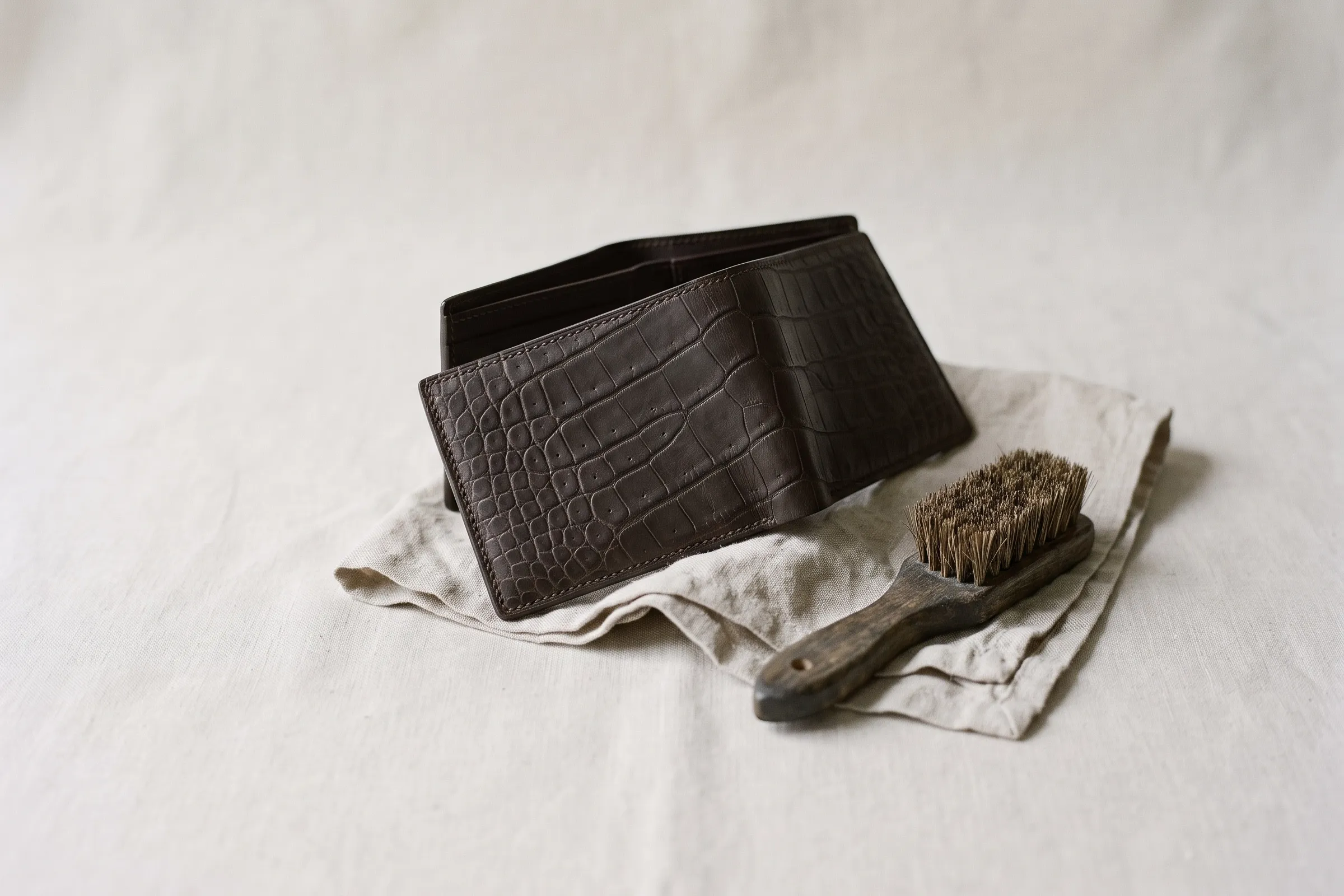
An alligator leather wallet is more than an accessory; it’s a statement of taste and a future heirloom. Like all fine things, it needs proper care. The good news is you can clean alligator leather at home if you follow the right steps. Using the wrong method, however, can cause permanent damage.
This step-by-step guide from Giuseppe Lombardi’s craftsmen shows you how to clean your alligator wallet safely and effectively.
What You’ll Need
Before you begin, gather the following:
- Soft, lint-free cloths (microfiber works well)
- Distilled water (tap water contains minerals that can leave marks)
- A specialist reptile leather cleaner (Saphir Reptile Cream or equivalent)
- A soft-bristled brush (a clean toothbrush or natural-hair brush)
- Leather conditioner appropriate for reptile leather
Step 1: Empty and Inspect
Remove all cards, cash, and receipts. Open every compartment. Check the wallet under good light for surface dirt, oil buildup from hands, or any areas where the scales appear dry or begin to lift.
This inspection helps identify whether you’re dealing with surface dust, embedded grime, or a piece that needs conditioning more than cleaning.
Step 2: Dry Dust First
Before using any moisture, remove surface dust and lint with a dry soft cloth, working gently in the direction of the scales. This prevents abrasive particles from grinding into the skin during wet cleaning.
Use a very soft brush for the crevices between scales, as debris can accumulate there and hold moisture against the leather if left untreated.
Step 3: Spot Clean with Distilled Water
Dampen a corner of your microfiber cloth with distilled water. It should be barely moist, not wet. Gently dab any visible marks or stains. Do not rub. Dabbing lifts the dirt; rubbing pushes it deeper.
For ink stains or pen marks, distilled water alone may not work. Use a specialist leather cleaner applied sparingly to a cotton swab and work at the stain from the outside in.
Step 4: Apply the Leather Cleaner
Apply a small amount of reptile-specific leather cleaner to a clean cloth, about the size of a pea. Work it across the surface in gentle circular motions, following the natural contour of the scales.
The cleaner will lift embedded oils and body residue that accumulate from daily handling. Pay particular attention to areas around the card slots and the spine of the wallet, which receive the most wear.
Step 5: Allow to Dry Naturally
This step is essential: let the wallet dry completely at room temperature, away from direct sunlight and any heat source (radiators, hairdryers). Heat causes alligator leather to dry out, stiffen, and eventually crack.
Allow at least 30 minutes of drying time before proceeding.
Step 6: Condition
Once completely dry, apply a thin layer of reptile leather conditioner with a clean cloth. This replenishes moisture lost during cleaning and maintains the leather’s supple feel.
Allow the conditioner to absorb for 15–20 minutes, then buff gently with a clean, dry cloth to restore the natural luster.
Step 7: Store Properly
Return the wallet to a breathable dust bag if you have one. If not, a clean cotton cloth works. Never store alligator leather in plastic; it needs to breathe.
For more insights on our craftsmanship, visit Our Story.
What to Never Do
- Never submerge the wallet in water
- Never use household cleaners, alcohol, or antibacterial wipes
- Never use heat to dry it
- Never use standard shoe polish; it blocks the scale texture
- Never scrub with abrasive materials
How Often Should You Clean Your Alligator Wallet?
For a daily-carry wallet: a light dry dusting weekly, a full clean every 3–4 months, and a conditioning session every 6 months. If the wallet gets wet (caught in rain, spilled on), clean and condition immediately after it has dried naturally.
A Giuseppe Lombardi alligator leather wallet, properly maintained, will outlast trends, seasons, and lesser alternatives by decades. Treat it accordingly.
FAQ
Can I use baby wipes to clean my alligator wallet?
No. Baby wipes contain alcohol, fragrance, and surfactants that strip the natural oils from exotic leather and can permanently alter the finish.
My wallet got soaked in the rain, what do I do?
Blot excess water with a dry cloth immediately. Let it air dry completely at room temperature; do not accelerate with heat. Once fully dry, condition it. If the scales have lifted or the leather has stiffened, consult a professional.
The color on my wallet is fading, is that normal?
Some natural fading is normal over many years. Premature fading usually indicates sun exposure or the use of incorrect cleaning products. A professional leather restorer can often bring back the original color.
Giuseppe Lombardi · The Journal
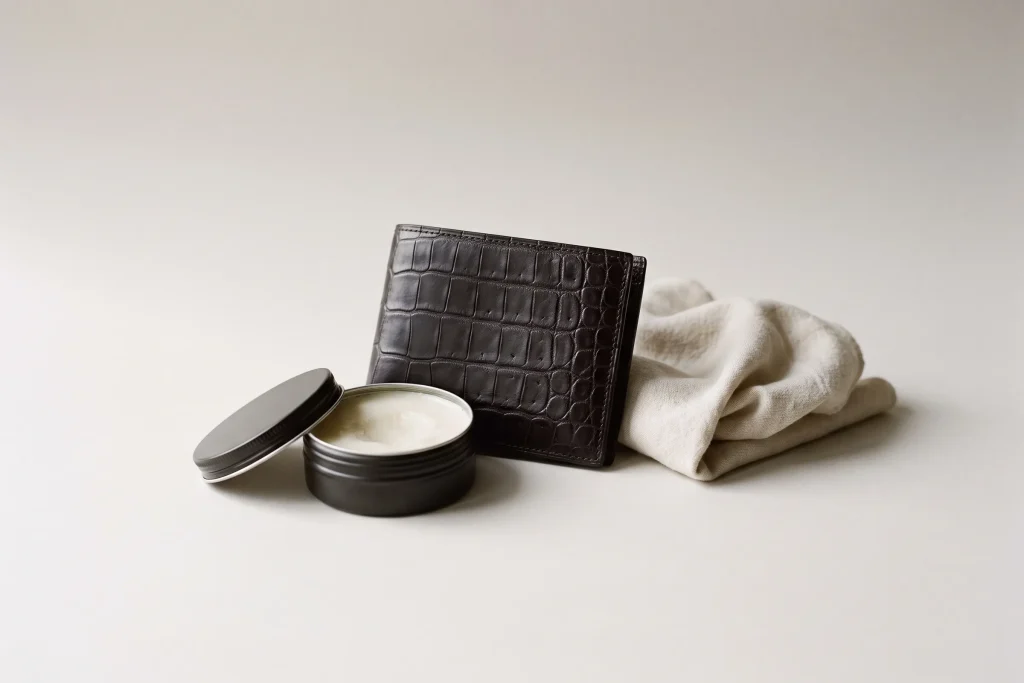 Exotic Leather Conditioner Guide – Crocodile, Ostrich & Stingray
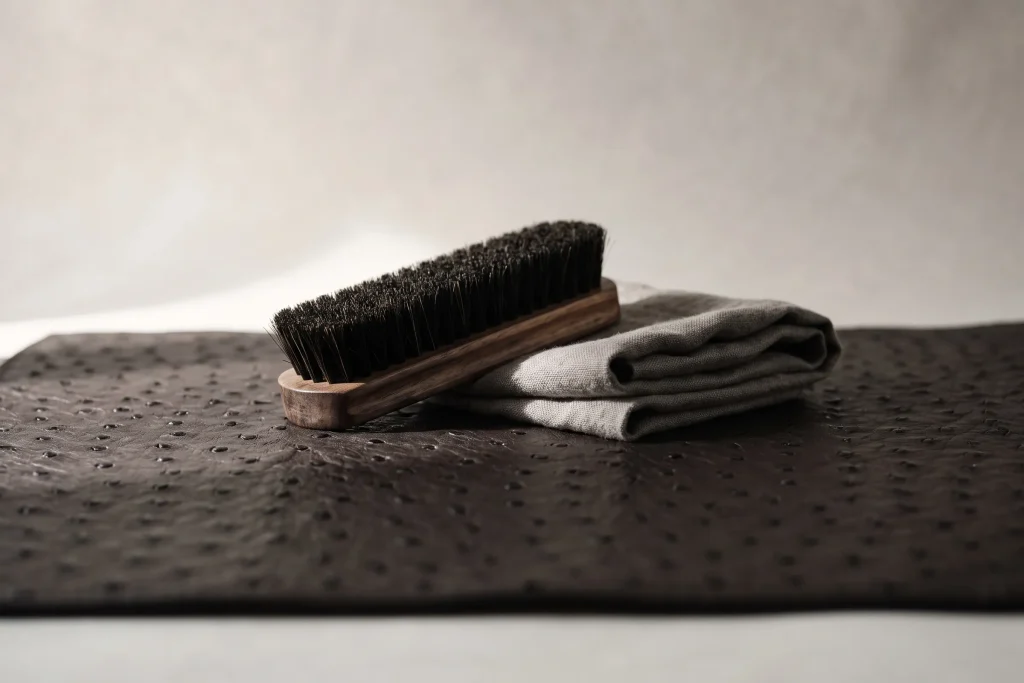 How to Care for Exotic Leather: A Complete Guide for Discerning Owners
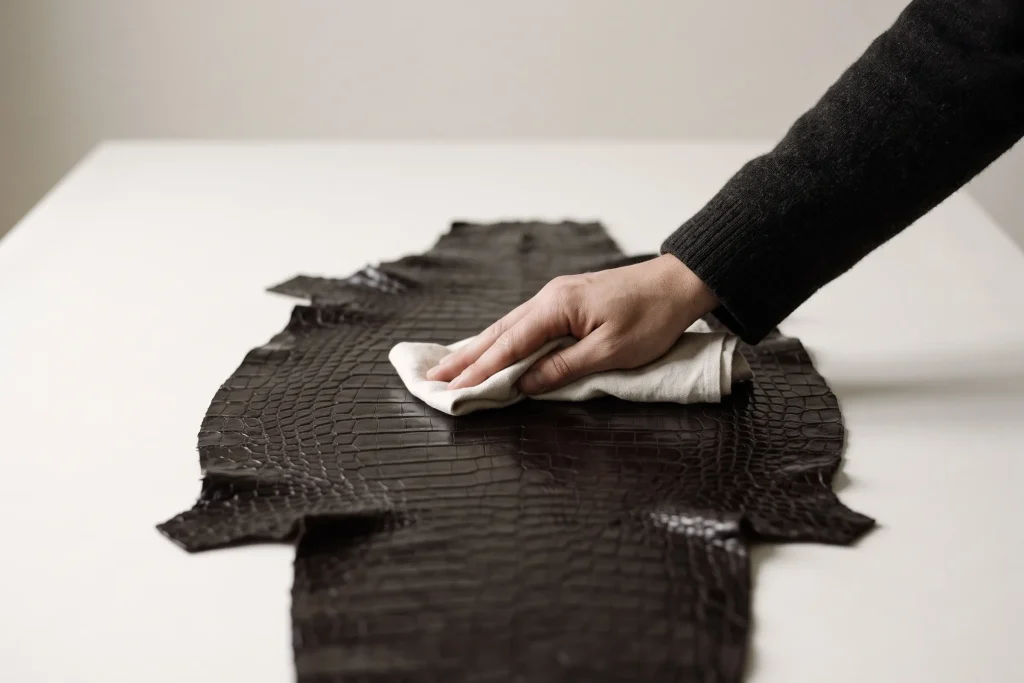 How to Clean Leather: A Complete Guide