The market for exotic leather goods is full of convincing fakes. With better printing and embossing technologies, fake crocodile leather looks a lot like the real thing. However, the quality and durability of genuine leather are unmatched. Knowing how to spot real leather is essential for buyers. If you want to see authentic luxury items, visit our Shop.
1. The Scale Symmetry Test
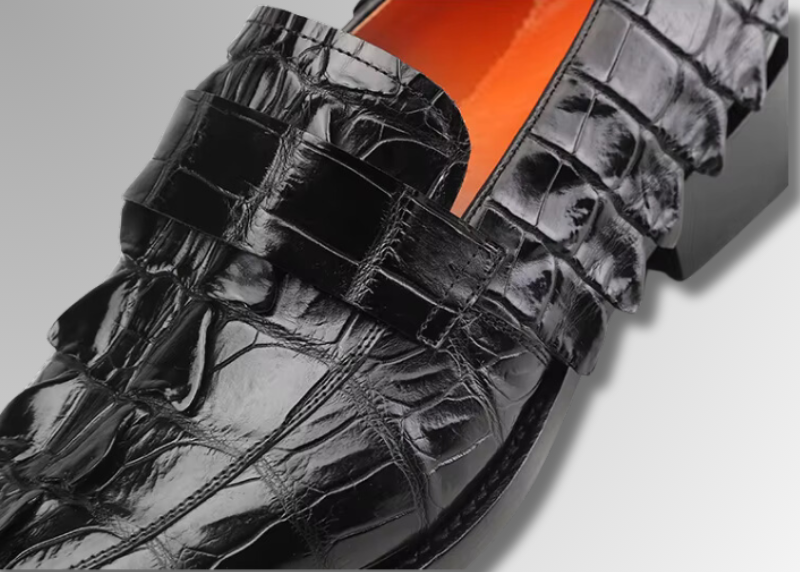
Real crocodile leather has uneven scale patterns. Belly scales are somewhat uniform but never perfectly symmetrical. Nature doesn’t create perfect repetition. Fake leather uses a repeating pattern. If you see the same pattern every few centimeters, it’s likely fake.
2. The Sensory Organ Marks
Many crocodile and alligator species have small sensory organs, appearing as tiny dots or pores on some scales. Genuine skin has these marks, which fakes can’t replicate. Their presence shows authenticity.
3. The Touch Test
Real crocodile leather feels unique. It’s firm yet flexible, with a slight warmth. The scales move independently under pressure. Fake leather doesn’t mimic this. Press gently to see if the scales move individually.
4. The Edge Examination
Check the edges, seams, strap ends, and interior edges of a bag. Real exotic leather shows a cross-section of natural hide with visible layers. Fake materials show a uniform, plastic-like cross-section.
5. The Scale Depth
In real leather, scales have depth and are slightly raised, creating shadows. Fake leather has a flat surface; the depth is just an impression, appearing flat in direct light.
6. The Price Reality Check
Real crocodile leather involves years of farming and skilled work. If a product’s price seems too good to be true, it probably is. A genuine belt starts at several hundred pounds, and a bag starts in the thousands. If the price is lower, the material is likely fake. To learn more about our quality, explore Our Story.
Understanding Spot Fake Crocodile Leather: A Deep Dive into Luxury Craftsmanship
In luxury fashion, Spot Fake Crocodile Leather is the peak of craftsmanship and exclusivity. Enthusiasts and collectors know that investing in these materials requires understanding their unique properties. The process of creating these masterpieces is steeped in tradition, ensuring every detail, from the first cut to the final stitch, is perfect.
The Enduring Importance of Spot Fake Crocodile Leather in Modern High-End Fashion
In today’s fast-paced world, appreciation for Spot Fake Crocodile Leather grows. Buyers seek rare pieces that stand out with striking textures and offer durability. Recognizing the care in producing these items is essential. From ethical sourcing to the final finish, every step shows the artisan’s dedication. By understanding and maintaining your Spot Fake Crocodile Leather, it remains a valuable part of your collection for years.
Ethical Sourcing, Global Conservation, and Sustainability
As demand for Spot Fake Crocodile Leather grows, ethical sourcing and sustainability are crucial. Top brands ensure materials comply with international wildlife regulations, like those by CITES. This commitment protects species and supports local communities involved in legal trade. For more on our ethical practices, visit Our Story.
How to Impeccably Style and Protect Your Luxury Investment
Styling Spot Fake Crocodile Leather requires an eye for elegance. Whether it’s shoes, a belt, or a handbag, these accessories elevate any wardrobe. Protecting these investments is important. Store items in a cool, dark place, using cotton dust bags. Use high-grade leather conditioners to maintain texture and luster. For the latest trends, explore our New Arrivals.
The allure of Spot Fake Crocodile Leather lies in its timeless appeal. By understanding its origins, crafting process, and care, you ensure your luxury items stay stunning and sound.