# The Art of Authenticating Exotic Leather Goods: A Comprehensive Guide
## Introduction
In the world of luxury fashion, exotic leather goods represent the pinnacle of sophistication and craftsmanship. From crocodile handbags to python wallets and alligator briefcases, these coveted items command premium prices and unwavering devotion from discerning collectors. However, as the market for luxury exotic leather continues to flourish, so too does the prevalence of counterfeits and misrepresented products. For Giuseppe Lombardi enthusiasts and luxury leather connoisseurs alike, understanding how to authenticate exotic leather goods is not merely a valuable skill—it’s an essential safeguard for protecting your investment and ensuring the integrity of your collection.
The global luxury leather goods market continues to expand, making authentication knowledge more critical than ever. Whether you’re considering your first exotic leather purchase or expanding an established collection, this comprehensive guide will equip you with the expertise needed to distinguish genuine exotic leather from inferior substitutes and outright forgeries.
## Understanding Natural Texture Patterns and Scale Formation
The most distinctive characteristic of authentic exotic leather lies in its natural pattern irregularities. Unlike embossed or printed imitations, genuine exotic skins display unique, non-repeating patterns that serve as nature’s fingerprint.
When examining crocodile or alligator leather, observe the scale tiles closely. Authentic specimens feature scales of varying sizes with natural imperfections, growth marks, and subtle asymmetry. Each tile should have a slightly raised center called an umbilicus, surrounded by a follicle pattern that’s impossible to replicate artificially. The scales should never appear perfectly uniform or mechanically repetitive—such regularity immediately signals embossed cowhide or synthetic materials.
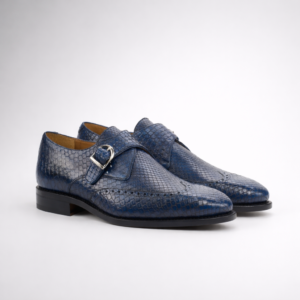
For python leather authentication, focus on the diamond-shaped scale patterns. Genuine python skin displays natural color gradation within each scale, with edges that are clearly defined yet organically irregular. The scales should have dimensional depth, with visible texture variation across the surface. Counterfeit python often appears too perfect, with mechanically precise patterns and artificial shine.
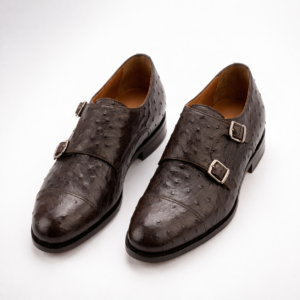
Ostrich leather presents its own authentication markers through its distinctive quill follicle bumps. These raised nodules, where feathers once grew, should vary in size and spacing across the hide. Authentic ostrich leather displays larger quills in the center panels with gradually smaller follicles toward the edges. The bumps should be naturally irregular and feel substantial to the touch, not superficially applied or uniformly distributed.
## Tactile Qualities and Physical Characteristics
Touch reveals truths that sight alone cannot confirm. Authentic exotic leather possesses distinctive tactile properties that counterfeiters struggle to reproduce accurately.
Genuine crocodile and alligator leather feels remarkably supple yet resilient, with a natural warmth that responds to body temperature. When gently pressed, authentic exotic leather displays subtle flexibility and immediate recovery, never creating permanent indentations or wrinkles like embossed substitutes. The underside or flesh side of genuine exotic leather shows irregular fiber patterns and natural imperfections, while fake leather typically displays uniform, cloth-like backing or synthetic consistency.
The weight and substance of authentic exotic leather differs significantly from imitations. Genuine crocodilian leather carries substantial heft appropriate to its thickness, while maintaining flexibility. Counterfeits often feel either suspiciously lightweight or unnaturally stiff, lacking the balanced hand-feel of premium exotic skins.
For stingray leather, authentication involves examining the pearl-like calcium deposits that create its distinctive texture. Genuine stingray features thousands of tiny, glass-like beads that are actually part of the skin’s structure, not applied coatings. These pearls should feel incredibly hard and scratch-resistant, with natural variation in size and distribution. Running your fingers across authentic stingray leather produces a unique tactile sensation that synthetic versions cannot replicate.
## Examining Construction Quality and Craftsmanship
The authentication process extends beyond the leather itself to encompass construction quality and artisanal craftsmanship. Giuseppe Lombardi pieces exemplify the meticulous attention to detail that distinguishes authentic luxury goods from counterfeits.
Examine edge finishing closely. Genuine luxury exotic leather goods feature hand-burnished or carefully painted edges with smooth, consistent coloring and no raw leather exposure. The edges should display multiple layers of finishing, creating a glass-like surface that reflects light uniformly. Counterfeit items typically show hastily finished edges with inconsistent coloring, rough textures, or visible adhesive.
Stitching quality serves as another critical authentication indicator. Authentic luxury pieces employ consistent, evenly spaced stitching with uniform tension throughout. The thread should be waxed, with