“`html
Alligator vs Crocodile Leather: The Ultimate Guide to Understanding Luxury Exotic Skins
Published on 2025-01-10 | Giuseppe Lombardi Luxury Leather Goods
When it comes to exotic leather goods, few materials command the same level of prestige and admiration as alligator and crocodile leather. To the untrained eye, these two luxury materials may appear remarkably similar, but connoisseurs and leather artisans know that significant differences exist between them. Understanding these distinctions is essential for anyone looking to invest in premium exotic leather accessories, whether you’re purchasing your first luxury handbag or expanding an established collection.
At Giuseppe Lombardi, we’ve worked with the finest exotic leathers for generations, crafting timeless pieces that showcase the unique beauty of each material. In this comprehensive guide, we’ll explore the fundamental differences between alligator and crocodile leather, helping you make an informed decision for your next luxury purchase.
The Biological Origins: Species and Geography
The first distinction between alligator and crocodile leather begins with the animals themselves. Alligators and crocodiles belong to different families within the order Crocodylia, and their geographical habitats play a significant role in leather quality and availability.
Alligator leather primarily comes from the American alligator (Alligator mississippiensis), found in the southeastern United States, particularly Louisiana and Florida. The controlled farming environments in these regions have established the United States as the premium source for alligator leather worldwide. American alligator leather is considered the gold standard in luxury goods, prized for its consistent quality and exceptional finish.
Crocodile leather encompasses several species, with the most sought-after being the Nile crocodile (Crocodylus niloticus) from Africa, the saltwater crocodile (Crocodylus porosus) from Southeast Asia and Australia, and the American crocodile. Each species offers subtle variations in scale patterns and texture, though all are protected under CITES (Convention on International Trade in Endangered Species) regulations to ensure sustainable sourcing.
This geographical distinction affects not only the leather’s characteristics but also its availability and price point in the luxury market. The well-established American alligator farming industry provides more consistent supply, while certain crocodile species may be rarer and consequently more expensive.
Texture and Aesthetic Differences: The Visual Appeal
The most noticeable difference between alligator and crocodile leather lies in their distinctive scale patterns and textural characteristics. These visual elements are what make each material uniquely beautiful and sought-after by luxury fashion enthusiasts.
Alligator Leather Characteristics
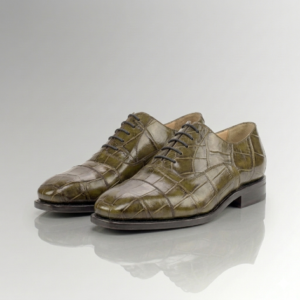
Alligator leather features a more uniform, symmetrical scale pattern with a smoother overall appearance. The umbilical region—the belly portion of the hide—displays neat, rectangular tiles without the prominent integumentary sensory organs (ISOs) that appear on crocodile skin. This creates a cleaner, more refined aesthetic that many designers prefer for elegant accessories. The scales tend to be more consistently sized, and the overall pattern has a harmonious, balanced look that translates beautifully into structured handbags, wallets, and belts.