“`html
How to Authenticate Exotic Leather Goods: Your Complete Guide to Identifying Genuine Luxury
Published: 2025-01-28 | Reading Time: 7 minutes
Introduction
In the world of luxury exotic leather goods, authenticity is everything. With the global market for premium leather accessories reaching unprecedented heights, counterfeit products have become increasingly sophisticated, making it challenging even for seasoned collectors to distinguish genuine pieces from imitations. At Giuseppe Lombardi, we understand that when you invest in exotic leather—whether it’s a crocodile handbag, python wallet, or ostrich briefcase—you’re not just purchasing an accessory; you’re acquiring a piece of art that should last generations.
The unfortunate reality is that fake exotic leather goods flood the market, often sold at prices that seem too good to be true because they are. These counterfeits not only represent financial loss but also ethical concerns regarding wildlife conservation and labor practices. This comprehensive guide will equip you with the knowledge to authenticate exotic leather goods confidently, ensuring your investment is genuine and your conscience is clear.
Understanding the Hallmarks of Genuine Exotic Leather
Authentic exotic leather possesses distinctive characteristics that are nearly impossible to replicate perfectly. The first rule of authentication is understanding that nature never creates perfect patterns. Genuine exotic leather shows natural irregularities, asymmetrical scale patterns, and unique markings that vary from piece to piece.
When examining crocodile or alligator leather, look for the umbilical scar—a distinctive mark left from the animal’s time in the egg. This appears as a slightly rough, elongated area on the belly skin and is one of the most reliable indicators of authenticity. Counterfeiters rarely replicate this detail. Additionally, genuine crocodilian leather features scales with raised, tile-like edges called “follicles” that have a three-dimensional quality. These should feel pronounced under your fingertips, not merely printed or embossed.
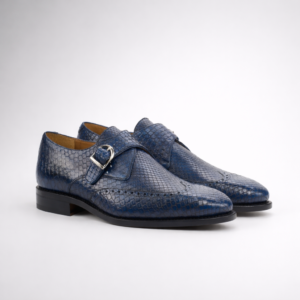
Python leather authenticity can be verified through its scale edges. Real python skin has scales that overlap naturally, creating subtle ridges you can feel when running your hand against the grain. The color depth in genuine python also penetrates through the skin, whereas dyed imitations often show different colors when you gently separate the scales. Each python scale should have a slightly different size and shape—machine-made patterns are typically too uniform.
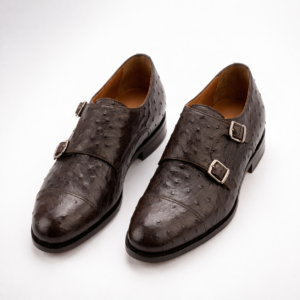
Ostrich leather presents its own authentication markers. The quill follicles—those distinctive bumps that make ostrich leather so recognizable—should be irregularly spaced and vary in size across the hide. Genuine ostrich leather will show these follicles naturally distributed with some areas having more prominent bumps than others. Fake ostrich leather often displays suspiciously uniform patterns with evenly spaced bumps.
The Touch Test: What Your Fingers Should Tell You
Tactile examination is perhaps the most revealing authentication method, though it requires some experience. Genuine exotic leather has a distinctive feel that embossed or printed imitations simply cannot match. When you handle authentic crocodile leather, you should feel the natural oils within the skin—it should never feel plasticky or overly stiff. Quality exotic leather has a supple quality that responds to the warmth of your hand, becoming slightly more pliable as you hold it.
The edges and cuts of the leather are particularly telling. Examine any exposed edges of the material—on straps, along seams, or inside pockets.