“`html
The Ultimate Guide to Authenticating Exotic Leather Goods: Protect Your Luxury Investment
Published: 2025-01-23 | Giuseppe Lombardi Luxury Leather Insights
In the world of luxury fashion, few materials command the prestige and price point of exotic leather goods. From crocodile handbags to python wallets, these exquisite pieces represent both artistry and investment. However, as the market for luxury exotic leather continues to flourish, so does the proliferation of counterfeit products that threaten to undermine the integrity of genuine craftsmanship.
At Giuseppe Lombardi, we understand that our discerning clientele invests not just in accessories, but in heritage, quality, and authenticity. Whether you’re purchasing your first exotic leather piece or expanding your collection, knowing how to authenticate exotic leather goods is essential. This comprehensive guide will equip you with the knowledge to distinguish genuine exotic leather from imitations, ensuring that every purchase meets the exacting standards you deserve.
Understanding the Anatomy: Natural Patterns That Cannot Be Replicated
The most fundamental aspect of authenticating exotic leather lies in understanding its natural characteristics. Unlike embossed or printed imitations, genuine exotic leather possesses unique patterns created by nature itself—and these patterns are impossible to perfectly duplicate.
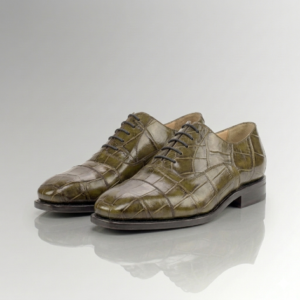
Crocodile and Alligator Leather: Authentic crocodilian leather features scale patterns with distinctive tile-like formations. Each scale should have a subtle follicle marking in its center—these tiny dots indicate where sensory organs once existed. The scales will vary slightly in size and shape across the hide, creating an organic, non-repetitive pattern. Run your fingers across the surface; genuine crocodile leather has a three-dimensional texture where you can feel the edges of each scale. Imitations typically present flat, uniform patterns with mechanical precision that nature never achieves.
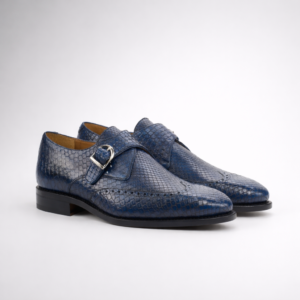
Python Leather: Python skin displays mesmerizing diamond-shaped scale patterns with natural color variations. Authentic python leather shows organic irregularities in scale size, with gradual transitions from the backbone to the belly. The scales should have subtle ridges and depth, and when examined closely, you’ll notice natural imperfections—small scars, variations in scale definition, or slight color inconsistencies that prove authenticity.
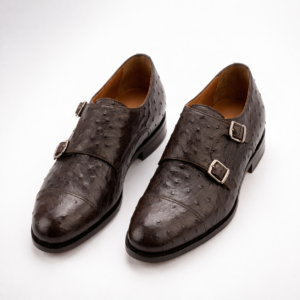
Ostrich Leather: The signature quill follicles of ostrich leather are raised bumps distributed across the surface in a random pattern. Genuine ostrich leather uses only the center portion of the bird’s skin where these quills are present. Each follicle should be naturally placed with varying distances between bumps. Synthetic versions often display mechanically uniform spacing or follicles that appear stamped rather than organically formed.
The Touch Test: Texture and Flexibility Reveal Quality
Authentic exotic leather possesses tactile qualities that sophisticated counterfeits struggle to reproduce. Your sense of touch provides invaluable authentication insights when examining luxury leather goods.
Genuine exotic leather feels supple yet substantial in your hands. When you gently press the material, it should respond with natural elasticity, returning to its original form without creasing permanently. High-quality exotic leather maintains structural integrity while demonstrating flexibility—it drapes naturally rather than appearing stiff or plastic-like.
Temperature response offers another telling characteristic. Place your palm against the leather for several seconds. Authentic leather adapts to your body temperature relatively quickly, warming naturally.