# The Art of Authenticating Exotic Leather Goods: Your Essential Guide
The Art of Authenticating Exotic Leather Goods: Your Essential Guide
In the world of luxury fashion, exotic leather goods represent the pinnacle of craftsmanship, exclusivity, and timeless elegance. From crocodile wallets to python handbags, these prestigious items command premium prices—and unfortunately, attract counterfeiters seeking to exploit unsuspecting buyers. At Giuseppe Lombardi, we believe that educating our clients about authentication is just as important as creating exceptional products. Whether you’re investing in your first exotic leather piece or expanding your collection, knowing how to distinguish genuine exotic leather from imitations is an invaluable skill that protects both your investment and ensures you’re acquiring true luxury.
Understanding the Stakes: Why Authentication Matters
The luxury exotic leather market has grown exponentially over the past decade, with genuine pieces from established houses like Giuseppe Lombardi appreciating in value over time. However, this growth has been shadowed by an equally sophisticated counterfeit industry. Fake exotic leather goods don’t just represent a financial loss—they often involve illegal wildlife trafficking, unethical manufacturing practices, and inferior materials that deteriorate quickly.
Authentic exotic leather goods are investments that can last generations when properly cared for. A genuine crocodile briefcase or alligator wallet carries with it a provenance of ethical sourcing, master craftsmanship, and materials that have undergone rigorous quality control. Understanding authentication protects you from purchasing embossed cow leather masquerading as crocodile, printed leather pretending to be python, or entirely synthetic materials claiming to be the real thing.
Beyond the financial aspect, authentication knowledge empowers you as a collector. You’ll develop a trained eye that appreciates the subtle nuances that make exotic leather truly exceptional, deepening your connection to these remarkable pieces.
The Tactile Test: Feel Tells the Truth
One of the most immediate ways to authenticate exotic leather is through touch. Genuine exotic leathers possess distinct tactile characteristics that are nearly impossible to replicate convincingly. Real crocodile and alligator leather, for instance, have a unique texture where each scale feels slightly raised, with natural variations in size and arrangement. When you run your fingers across authentic crocodile skin, you should feel the individual tiles and valleys between scales—not a uniform, stamped pattern.
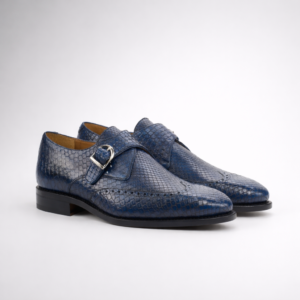
Python leather presents a different tactile signature. Authentic python has a slight rigidity to its scales, which are actually still attached to the skin beneath. The scales should feel like they’re part of an integrated structure, not simply printed or pressed onto a surface. Additionally, genuine python has a subtle flexibility that synthetic versions struggle to match—it moves naturally rather than feeling stiff or plasticky.
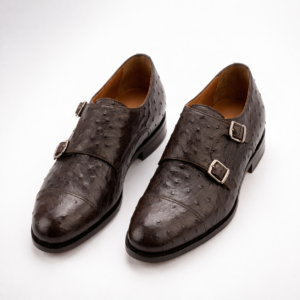
Ostrich leather is perhaps the easiest to authenticate by touch. The characteristic quill bumps (follicles where feathers once grew) should be clearly raised and evenly distributed across the leather’s surface. These bumps should feel natural and irregular rather than mechanically uniform. Fake ostrich leather often uses embossed patterns that feel too regular and lack the depth of genuine follicles.
Temperature response also reveals authenticity. Genuine exotic leathers are natural materials that warm quickly to body temperature, while synthetic materials tend to remain cool or heat up unevenly. This simple test can immediately flag suspicious pieces.
Visual Inspection: Reading the Natural Patterns
Nature never repeats itself exactly, and this principle is your greatest ally in visual authentication. Genuine exotic leathers display natural asymmetry and variation that counterfeiters find extremely difficult to reproduce. When examining crocodile or alligator leather, look for irregularities in scale pattern, size variations, and natural imperfections. The scales should transition organically across the leather’s surface, with the pattern flowing naturally rather than repeating in obvious ways.
The belly region of crocodilian leather (the most prized area) shows rectangular tiles that become less uniform toward the edges. Each scale should have subtle differences in texture and appearance. If you see a perfectly symmetrical pattern or scales that look mechanically identical, you’re likely looking at embossed leather.
Color variation is another telltale sign.